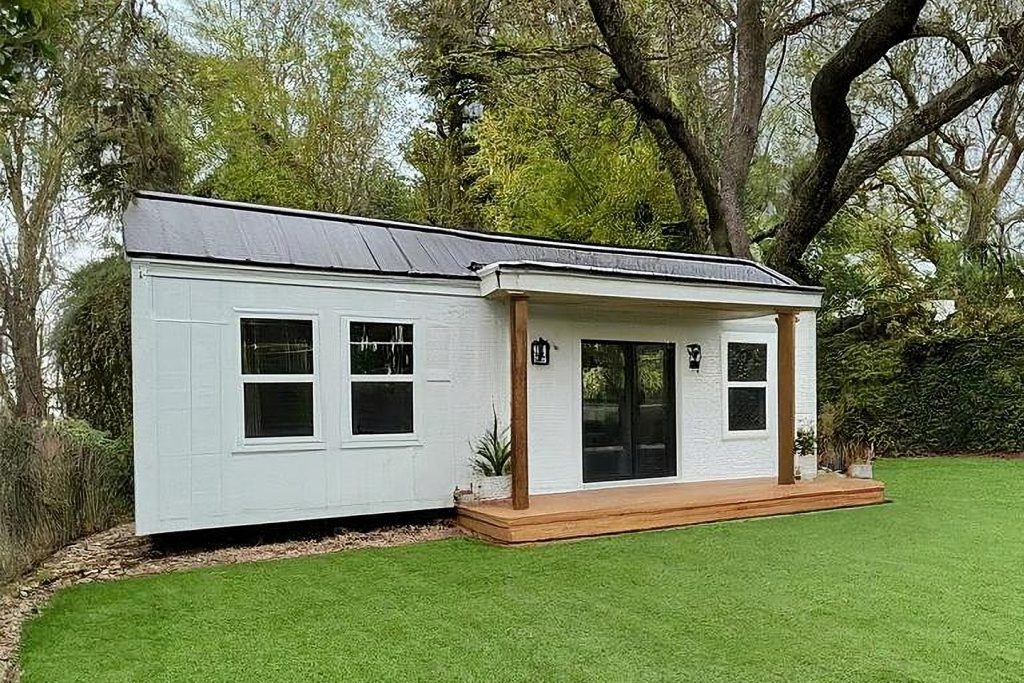
You're probably looking at a part of your property that isn't doing much for you. A backyard corner that holds old furniture. A garage that became storage overflow. A side yard that feels too awkward for anything useful. At the same time, you may need a guest house, a rental unit, a place for parents, or a smaller way to live without giving up good design.
That's where tiny home modern design gets interesting. The appeal isn't just the look. It's the promise that a compact space can still feel calm, organized, bright, and grown-up. The problem is that many modern tiny home ideas look great in a rendering and become frustrating once real life moves in. Bags need a place to land. Coats pile up. Someone has to cook, work, shower, sleep, and store seasonal items without turning the room into a maze.
This guide is built for that reality. It bridges the gap between the polished tiny home you save on Pinterest and the one you can build, permit, furnish, and enjoy for years.
Table of Contents
- The Modern Tiny Home Dream
- Core Principles of Modern Tiny Design
- Strategic Layouts and Floor Plan Essentials
- Choosing Materials for Style and Function
- Smart Solutions for Storage and Lighting
- Future-Proofing and Extending Your Space
- From Blueprint to Your Backyard
The Modern Tiny Home Dream
The tiny home stopped being a fringe idea a while ago. One market projection says the global tiny-homes market will grow from USD 8.70 billion in 2026 to USD 13.44 billion by 2033, at a 6.5% CAGR, and that the mobile tiny homes segment is projected to account for 59.6% of the market in 2026, according to Coherent Market Insights' tiny homes market report. That matters because steady demand tends to improve floor plans, materials, and builder experience.
For homeowners, the appeal is practical. A tiny home can support multigenerational living, create a private guest space, add flexible work space, or turn underused land into something useful. For downsizers, it can strip away waste without stripping away comfort.
The dream usually starts with aesthetics. Clean lines. Warm wood. matte black fixtures. Big glass. Open shelving. A compact kitchen that somehow looks effortless. But modern design only works in a tiny footprint when every visual choice also solves a daily problem.
A beautiful tiny home that fights you every morning isn't modern. It's just well photographed.
That's the shift most buyers need to make. Don't ask only, “Does this look modern?” Ask, “Does this plan make normal life easier?” The answer depends on layout, storage, site planning, utility strategy, and local rules as much as finishes.
A good modern tiny home can absolutely feel inspiring. It can also be legal, durable, and easy to live in. Those outcomes come from disciplined decisions, not trend boards.
Core Principles of Modern Tiny Design
Small space is a design discipline
Tiny home modern design isn't a standard house shrunk down. It's closer to designing a yacht cabin or a high-function studio apartment, where every inch has a job and every visual decision affects how large the space feels.
The design canvas is small by definition. The International Residential Code commonly defines a tiny house as 400 square feet or less, and the contrast is sharp when you compare that with the average new U.S. home, which reached 2,479 square feet by 2007, as summarized in the tiny-house movement overview. That difference explains why tiny homes demand a different mindset from the start.

Three principles that actually hold up
The first principle is intentional minimalism. That doesn't mean making the home feel sparse or severe. It means choosing fewer things, better things, and giving each one a place. If you're trying to bring a full suburban inventory into a tiny home, the design will lose. That's why many homeowners spend time refining priorities before finalizing plans. A good starting point is this guide on how to embrace minimalism in a small home.
The second principle is multifunctional utility. The dining bench might hold linens. The stair treads might become drawers. A work surface might shift from desk to prep counter. In larger homes, rooms can absorb inefficiency. In a tiny home, wasted function shows up immediately.
The third is control of light and scale. Modern tiny spaces feel bigger when sightlines stay open, window placement is deliberate, and the ceiling volume is used wisely. A clean palette helps, but color alone won't save a cramped plan. What matters more is how walls, windows, storage bulk, and furniture heights work together.
A few practical rules matter here:
- Keep visual weight low: Use taller storage in limited zones rather than scattering bulky cabinets around the room.
- Protect one clear sightline: When you enter, your eye should travel toward a window, not into a cabinet edge.
- Avoid decorative clutter: In small spaces, styling objects quickly become functional obstacles.
Practical rule: If an item needs to be moved every day so another function can happen, the design isn't resolved yet.
Modern tiny design works when beauty and utility become the same decision.
Strategic Layouts and Floor Plan Essentials

The layouts that feel easiest to live in usually aren't the ones with the most features. They're the ones with the least conflict between features. That's why the most functional tiny homes often land in the 200 to 300 sq ft range, where you still have room to separate circulation, seating, sleeping, and storage without crushing the main space, based on Cedreo's tiny house dimension guide.
What a workable plan usually gets right
That same guide gives practical minimums that are useful when you're reviewing a floor plan. A main level often needs around 6.8 to 7 ft of interior clearance to feel usable. A loft generally works with about 3.5 to 4 ft of clearance. A bedroom area of roughly 50 sq ft and a living area around 60 to 80 sq ft are strong reality checks when a plan looks stylish but suspiciously tight.
Those numbers matter because bad tiny layouts usually fail in circulation first. You can survive a compact bedroom. You won't enjoy a home where two people can't pass each other, where the bathroom door blocks the kitchen, or where getting to storage means unfolding furniture every time.
A workable plan usually includes:
- A protected path: You should be able to move from entry to bath to bed without squeezing past chairs or open doors.
- Distinct zones: Even in one room, living, sleeping, cooking, and working should feel assigned.
- Storage near activity: Shoes near the door, cookware near prep space, bedding near the sleep area.
Common layouts and where they fail
The linear layout places kitchen, bath, and living functions along a single spine. It works well when you want one strong window wall and a clean modern look. It fails when too many doors swing into the same narrow corridor.
The lofted layout frees the main floor for living and storage. It works best for owners who are comfortable with climbing and don't mind a lower sleeping zone. It becomes frustrating when the loft is treated like a full bedroom but only accessed like attic storage.
The main-floor bed layout often suits aging in place, guests, or daily comfort better than a loft. The trade-off is that the bed consumes prime square footage, so the storage plan has to be sharper and the living area has to stay disciplined.
Here's a useful planning lens:
| Layout choice | What it helps | What it can hurt |
|---|---|---|
| Loft sleeping | Opens main floor | Accessibility, headroom comfort |
| Main-floor bed | Easier daily use | Reduces daytime living flexibility |
| Linear galley kitchen | Keeps plumbing compact | Can narrow circulation |
| Open living core | Improves spacious feel | Needs stricter clutter control |
This walkthrough is worth watching once you've looked at a few plans and want to compare them against real interiors:
Use drawings to test daily movement
Don't judge a floor plan only by the furniture symbols. Test it with routines. Where does a coat go when you walk in? Can someone sit on the sofa while another person cooks? Is there a place to work without taking over the dining table?
Draw the mess, not just the furniture. Bags, laundry, shoes, groceries, and laptop chargers are what expose weak layouts.
That's the difference between a conceptual plan and a home that works on a Tuesday morning.
Choosing Materials for Style and Function
Materials define the mood of a tiny home fast. They also determine how much maintenance you inherit, how well the shell handles weather, and whether the interior still looks good after daily use in a compact footprint.
Exterior materials set the maintenance burden
A modern exterior often leans toward wood, metal, or a mix of both. Wood siding can give a tiny home warmth and architectural depth. It also asks for more attention over time, especially where sun, moisture, or freeze-thaw cycles are hard on finishes.
Metal siding creates a crisper contemporary look and tends to simplify upkeep. The trade-off is feel. If every exterior and interior choice trends hard and cold, the home can start to resemble a utility enclosure instead of a place to live.
Roofing, insulation, and window trim need the same level of discipline. In small builds, material mistakes become visible quickly because there's nowhere for poor detailing to hide.
Inside finishes should work harder than they look
Interior finishes need to be durable, easy to clean, and visually calm. Flooring should handle sand, pets, wet shoes, and heavy use without demanding constant care. Wall finishes should reflect light without turning flat and lifeless. Countertops should survive daily prep in a kitchen where there's very little backup surface.
Curation matters. Some homeowners want to evaluate every product themselves. Others prefer a narrower menu of proven combinations. CozyCube offers customizable layouts, smart space-saving designs, and finish selections for permanent ADUs, which can simplify decisions for owners who want guidance without designing every detail from scratch.
A compact comparison can help cut through style fatigue:
| Material | Average Cost | Durability/Lifespan | Maintenance Level | Sustainability Notes |
|---|---|---|---|---|
| Cedar siding | Varies by market and finish | Good when detailed and maintained well | Moderate to high | Wood-based option, often chosen for natural character |
| Metal siding | Varies by profile and coating | Strong long-term exterior performer | Low to moderate | Can be a durable choice with long service life |
| Engineered wood flooring | Varies by wear layer and brand | Good for many residential uses | Low to moderate | Can reduce use of solid hardwood material |
| Solid wood cabinetry | Varies by species and construction | Durable and repairable | Moderate | Long-lasting and refinishable when well made |
| Quartz countertops | Varies by color and supplier | Durable for everyday kitchen use | Low | Chosen more for longevity and low upkeep than for natural sourcing |
| Recycled-content finishes | Varies widely | Product-dependent | Product-dependent | Can support lower-waste material palettes |
The right palette does two things at once. It makes the home feel coherent, and it keeps ownership manageable.
Smart Solutions for Storage and Lighting
Some tiny homes look spotless in photos because nothing is happening in them. No backpacks by the door. No dog leash. No extra blanket. No laptop charger. Real life changes the room fast, which is why liveability has to drive storage and lighting choices from the start.
Independent architectural commentary makes that point clearly: sleek concepts can overpromise, and tiny homes work best when design actively reduces daily friction around sleeping, storage, and cooking, as discussed in this review of small-home liveability.
Storage should remove friction, not just hide clutter

The best storage is placed where the item is used. That sounds obvious, but many tiny homes still treat storage as a leftover issue. The result is overhead cabinets you can't reach, under-bed compartments that are too annoying to open, and open shelves that make the room feel busy by noon.
Better solutions are usually integrated and boring in the best way:
- Toe-kick drawers: Useful for flat items that otherwise float around the house.
- Stair storage: Better than decorative stairs with dead space behind them.
- Vertical pantry cabinets: Strong in small kitchens where floor area is limited.
- Bench seating with lift-up storage: Good for bulky but occasional items.
- Drop zones near the entry: Essential if you want the main room to stay calm.
If you want more visual examples for compact interiors, these ADU interior design ideas for small-space living are a useful reference point.
Light needs layers
A single ceiling fixture won't carry a tiny home. It flattens the room and leaves corners dark. Modern interiors feel larger when lighting works in layers.
Start with ambient lighting for overall visibility. Add task lighting at the kitchen counter, bedside, desk, and bathroom mirror. Then use accent lighting sparingly to soften edges and create depth, such as under-cabinet strips or wall sconces.
Good lighting makes a tiny home feel intentional at night. Bad lighting makes even a well-designed interior feel temporary.
Natural light matters too, but it needs control. Large windows can make a tiny home feel open and connected to the site. They can also create glare, reduce privacy, and leave you short on wall space. The answer usually isn't “more glass everywhere.” It's better-placed glass where it improves daily life.
Future-Proofing and Extending Your Space
A tiny home doesn't stop at the exterior wall. That's one of the biggest design mistakes people make when they evaluate compact living. They compare indoor square footage and ignore the site, even though outdoor space often determines whether the home feels constrained or generous.
Recent coverage of luxury tiny living has focused on outdoor areas that expand perceived square footage and on the idea that buyers increasingly see tiny homes as site-specific ecosystems rather than isolated objects, with decks and exterior design functioning as living space, as discussed in this video on luxury tiny-home design and outdoor integration.

Outdoor rooms change the entire experience
A deck can become the dining room in good weather. A covered stoop can make the entry feel finished. A small courtyard can give the living room something to borrow visually. These aren't luxuries in tiny home modern design. They're part of the floor plan.
What works well:
- Covered transitions: They make the home usable in more weather conditions.
- Direct indoor-outdoor access: Best when it aligns with the kitchen or living zone.
- Natural elements for privacy: Planting can do the work that extra walls can't.
What tends to fail is treating the exterior as leftover space. A tiny home parked in the middle of a bare pad will always feel smaller than one anchored by paths, shade, storage, and a place to sit outside.
Design for the next life stage
Future-proofing also means asking who might use the home later. A loft may work now and become inconvenient later. A narrow bathroom door may feel acceptable until a guest needs easier access. A raised threshold may seem minor until mobility changes.
A stronger long-term approach often includes a main-floor sleeping option, easier entry, simpler circulation, and a bathroom layout that doesn't require acrobatics. Even if you don't need those features today, flexible planning protects the home's usefulness for family, guests, aging parents, or your future self.
From Blueprint to Your Backyard
The final stretch is where many projects stall. Not because the design is weak, but because the owner hasn't separated three different questions: what kind of structure they're building, what local rules apply, and how they plan to pay for it.
Know what you're building before you price it
A wheels-based tiny home and a fixed-foundation backyard unit don't move through the same approval path. They can differ in how utilities are handled, how the structure is classified, and what local authorities expect. If you blur those categories early, you can waste a lot of time pricing the wrong thing.
Before you request bids or compare packages, clarify:
- Use case: Full-time living, guest housing, rental use, office, or family suite.
- Structure type: Mobile unit or permanent foundation build.
- Site conditions: Access, slope, setbacks, utility distance, and privacy needs.
- Local review path: Zoning, building, and utility requirements.
For owners comparing approaches, these affordable tiny home kits and related options can help frame what level of customization and site work may be involved.
The right questions save months
Permitting is local. Financing is personal. That means the smartest move is asking precise questions early rather than hunting for one universal answer.
Ask your city or county how they classify the structure, what size and placement limits apply, what utility connections are required, and whether owner occupancy or parking rules affect the project. Ask lenders which products fit your scenario, such as home equity borrowing, refinance-based funding, or construction-focused financing.
A good project team helps translate those answers into design decisions. That's what turns a compelling idea into a buildable one.
If you're ready to move from saved inspiration to a workable plan, CozyCube can help you evaluate layouts, material choices, site strategy, and the practical steps required to turn a modern tiny home into a real backyard project.