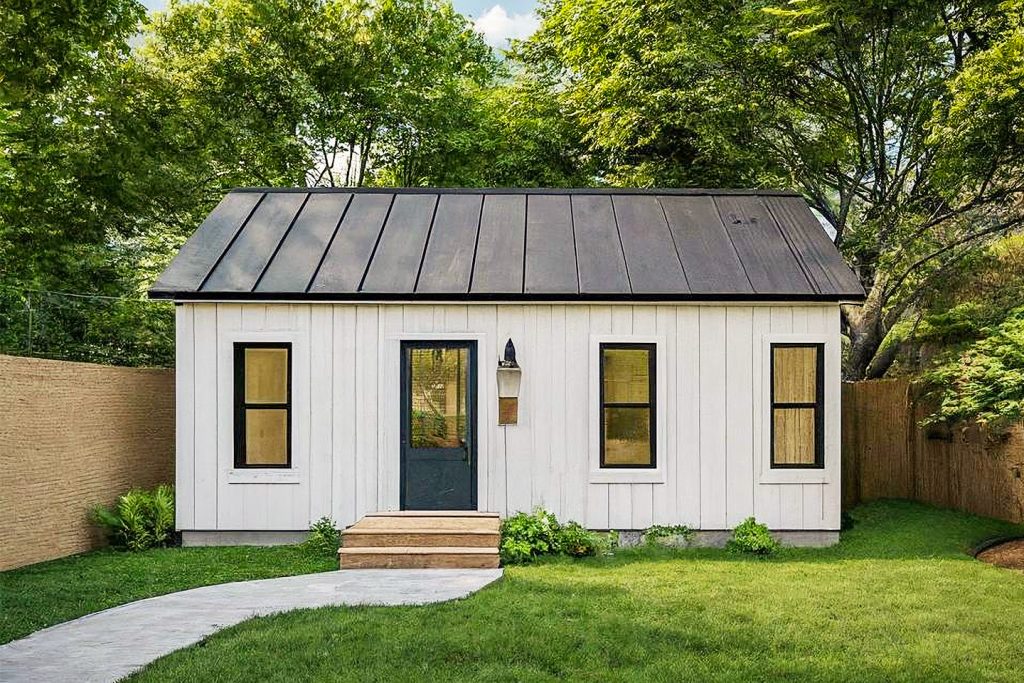
You're probably looking at a backyard, side yard, garage, or basement and trying to answer a very practical question: is building an accessory dwelling unit worth it, or is it one of those projects that looks good on paper and turns messy once money starts moving?
That's the right question.
Most homeowners don't start with zoning language or construction drawings. They start with a life problem. A parent needs to live closer. An adult child needs a landing place. You want rental income, but don't want to sell the house you already have. Or you need more usable space without moving and taking on a whole new mortgage.
An ADU can solve those problems well. It can also become an expensive detour if you underestimate rules, utilities, financing, or the cash you'll carry while the unit is still under construction. The primary work in building an accessory dwelling unit isn't only the build itself. It's making dozens of good decisions early, before you've paid for the wrong plan.
Table of Contents
- Why Build an ADU and Is It Feasible for You
- Mastering Local Regulations and Site Preparation
- Designing a Smart and Sustainable ADU
- Financing Your ADU and Understanding the Costs
- Your Guide to the ADU Permitting Process
- Managing ADU Construction from Start to Finish
- Maximizing Your ADU's Long-Term Value
Why Build an ADU and Is It Feasible for You
A typical ADU conversation starts like this. A homeowner says they want more space, maybe some rental income, maybe room for a parent later. Then we price the project, review what the property can support, and the question changes from "Can we build one?" to "Will this pay off for the way you plan to use it?"
That is the right question.
At CozyCube, the strongest ADU projects start with a specific job the unit needs to do. Housing for a parent, a place for an adult child, a long-term rental, a home office that can convert to living space later. The use case drives the layout, the finish level, the utility plan, and the budget. It also changes the financial math. A family-use ADU can make sense even if it never produces rent. A rental ADU has to carry construction cost, financing cost, vacancy risk, maintenance, and the fact that the unit is still tied to the main property.
An ADU is a full dwelling, not extra finished space. If you need a quick baseline, this guide to the difference between a tiny house and a legal dwelling unit helps clarify why kitchens, bathrooms, sleeping space, code compliance, and legal status matter from day one.
Practical rule: If you cannot name the occupant and the reason for the build in one sentence, you are still too early to budget accurately.
A homeowner who says, "My father needs a ground-floor unit close to us within the next year," is ready to make good decisions. A homeowner who says, "We just want flexibility," usually needs to sort out priorities first, because flexibility gets expensive fast.
The homeowner situations that make an ADU make sense
Family housing is the most forgiving use case financially. The return is not just rent. It can be avoided assisted-living cost, reduced family housing pressure, or keeping care close to home. In those projects, privacy, one-level access, low-threshold showers, quiet HVAC, and a short, well-lit path to the main house usually matter more than premium finishes.
Rental use is less forgiving. Rent can help justify the build, but owners often underestimate the all-in carry. Loan payments start before rental income does. Insurance changes. Utility splits can be awkward. Property taxes may rise. If the layout is inefficient or the unit has poor storage, tenant turnover gets more expensive because every vacancy month matters.
Garage conversions, detached backyard cottages, and attached additions can all work. They do not pencil out the same way. A garage conversion may look cheaper at first, but low slab elevations, utility upgrades, and fire separation requirements can erase the savings. A detached ADU usually costs more upfront, yet it often rents better because it feels private. An attached ADU can be the best answer for multigenerational living, but only if sound control and separate access are handled well.
The first feasibility questions to answer
Before you look at floor plans, answer these questions:
- What is the primary payoff: monthly rent, family housing, future flexibility, resale appeal, or a mix of those goals?
- What can you afford to carry during design and construction: not just the build cost, but interest, permit fees, consultant fees, and any period with no offsetting income?
- What type of ADU fits your lot and your budget: detached, attached, basement conversion, or garage conversion?
- Can the unit function as a real home: kitchen, bath, sleeping area, privacy, storage, and access all have to work together?
- Will the property support the build without hidden site cost: access, grading, drainage, and utility routing can change the budget quickly?
- What legal limits apply after completion: rental restrictions, occupancy rules, or owner-occupancy requirements can affect the return?
One detail owners miss all the time is legal status after the final inspection. Cincinnati's ADU guidance highlights that local rules can include occupancy conditions and recorded restrictions tied to the property. That matters because an ADU usually does not become a separate, freely saleable asset. It remains part of the same parcel, which affects refinancing, resale strategy, and how you think about long-term value.
The true test of feasibility emerges. If your budget only works with best-case rent, no delays, and no utility surprises, the project is thin. If the ADU still makes sense after you include soft costs, carrying costs, and a conservative income assumption, you are looking at a buildable plan.
Mastering Local Regulations and Site Preparation
A lot of ADU budgets go sideways before the owner ever hires a designer. The pattern is familiar. Someone sketches a detached one-bedroom in the backyard, prices the structure, and assumes the rest will sort itself out. Then zoning cuts the size, utilities need a longer run than expected, or access forces hand-carry labor that raises the build cost.
How to check the rules before you spend on design
Start with your parcel, not a floor plan.
Go to the city or county planning site, pull the property record, confirm the zoning, and read the local ADU ordinance and development standards. The goal is simple. Find out what the site can legally support before you pay for drawings that need to be redone.
Ask specific questions:
- Is an ADU allowed on this parcel as of right, or only through a discretionary review?
- What setbacks apply, and are they different for detached versus attached units?
- How does the city measure height?
- Are there lot coverage, floor area, or open space limits?
- Do overlays, historic rules, coastal rules, or hillside rules add another layer of review?
- Are there utility, parking, or owner-occupancy conditions that affect the project after completion?
Cities often say yes to ADUs in principle and still narrow the options once you get into the details. A unit may be allowed, but only within a tight size range, behind a required rear setback, under a lower height cap, or subject to design standards that affect roof form, windows, and exterior materials. Those limits matter because they change your usable square footage, your engineering approach, and the rent or family use the project can realistically support.
If you're still sorting out the terminology, this guide to a tiny house definition helps clarify how ADUs overlap with other small housing types and where the legal differences start.

A quick zoning read can save months. It can also save real money. If local rules cap the footprint or push the structure into a more expensive part of the lot, the project may still work, but the return changes. That is why I tell owners to treat code research as part of underwriting, not paperwork.
How to assess the site like a builder
Legal approval is only half of feasibility. The lot still has to build well.
Walk the property and look at it the way the trades will. Crews need a path to the work area. Concrete needs a route. Electricians and plumbers need practical utility runs. If every task requires extra labor because access is tight or the grade is awkward, the site prep line item grows fast.
Focus on the conditions that change cost early:
- Access width: Check whether equipment, materials, and debris removal can get to the build area without tearing up fences, garages, or the main house.
- Slope and drainage: Sloping sites often need more excavation, retaining, drainage work, or a different foundation system.
- Utility routing: Find the likely path for water, sewer, electrical service, and panel upgrades. Long runs and hard trenching add cost quickly.
- Physical obstacles: Mature trees, retaining walls, overhead lines, sheds, and easements can restrict placement or trigger extra work.
- Staging area: Materials, dumpsters, and crew parking need space. If the site has no room to stage, labor gets less efficient.
One hard truth from the field. Zoning problems often get solved with revised plans. Site problems usually get solved with added money.
That is why site prep deserves the same scrutiny as the construction budget. A flat backyard with clean utility access behaves like a different project than a rear lot behind a narrow side yard with old sewer lines and drainage trouble. On paper, both may be “one ADU.” In practice, one can pencil out cleanly and the other can absorb enough pre-construction and site cost to weaken the return for years.
Designing a Smart and Sustainable ADU

Make the floor plan work harder
Small spaces punish bad decisions. A hallway that feels harmless on paper can steal space from the kitchen, storage, or bathroom where it matters more.
The best ADU layouts usually do three things well. They reduce wasted circulation, give the living area natural light, and make storage part of the architecture instead of an afterthought. That might mean a built-in bench with storage, a dining surface that doubles as a work table, or a bedroom layout that uses a wall bed or integrated wardrobe instead of loose furniture.
When homeowners are comparing options, it helps to look at real floor plans for a granny flat so they can see how different layouts handle kitchens, bathrooms, and privacy zones inside a compact footprint.
A smart plan doesn't try to imitate a large house. It accepts the size and makes every zone earn its place.
Design for operating cost, not just appearance
A sustainable ADU isn't only about materials. It's about long-term livability and monthly cost control.
That usually means choosing finishes and systems that stay easy to maintain when the unit is occupied every day. Durable flooring, efficient appliances, good insulation strategy, sensible window placement, and easy-to-clean bath and kitchen details often matter more than decorative upgrades. If the ADU is meant for rental use, simpler finish packages can also reduce turnover work later.
For clients weighing options, one practical approach is to compare three buckets during design:
| Decision Area | Lower Upfront Cost | Higher Upfront Cost |
|---|---|---|
| Flooring | Basic replacement-prone finishes | More durable surfaces that may reduce maintenance |
| Cabinetry | Standard stock choices | Better storage and hardware that can age better |
| Mechanical systems | Minimum-spec selections | Efficiency-focused systems that may lower operating strain |
The right answer depends on who will live there. A family-use ADU and a rental ADU often justify different spending.
Get MEP coordination right from day one
Attractive designs go wrong here.
ADUs aren't just small structures. They're self-contained homes with kitchens, bathrooms, sleeping areas, and full utility systems. Industry guidance stresses that plumbing, electrical, HVAC, and code compliance have to be designed as one integrated package, and that final inspections verify life-safety and system details before occupancy in this ADU construction breakdown.
If the kitchen wall moves late, the plumbing changes. If the plumbing changes, electrical and ventilation often change with it.
That's why “we'll figure it out in the field” is expensive language.
One practical way to avoid rework is to freeze the wet-wall locations early. Put the kitchen, bath, water heater, laundry, and major duct or mini-split decisions on the table before drawings are finalized. Companies such as CozyCube build around that logic by pairing floor-plan selection with finish and layout decisions early enough to keep the design practical, not just attractive.
Financing Your ADU and Understanding the Costs
What the headline budget misses
A common ADU scenario looks like this: a homeowner starts with a build number that feels manageable, then gets surprised by the months of spending before the unit is finished and usable. That gap is where a lot of projects get into trouble.
Homeowners usually ask, “What does it cost to build?” The more useful question is, “How much cash will this project consume before it starts saving or earning money?” Build cost is only one line item. Interest, plan work, permit fees, utility coordination, insurance, and schedule drift can matter just as much.
Local Housing Solutions notes that detached ADUs can cost roughly $100,000 to $350,000+, while conversions are often $30,000 to $75,000, in its ADU policy and economics guide. Those ranges help set expectations, but they do not capture the actual economics of ownership. A detached unit with heavy site work can strain cash flow even if the final rent looks strong on paper. A conversion can produce a better return if it avoids new foundations, trenching, and long construction schedules.
That is why I tell owners to separate two numbers early:
- Total project cost: design, permits, site work, construction, utility work, finishes, and contingency
- Carrying cost: loan interest, required reserves, property holding costs, and any period where money is going out but the ADU is not yet occupied
A project can pencil out in theory and still be painful to carry in real life.
ADU Financing Options Compared
Some owners pay cash and keep full control over the timeline. Many others use debt tied to the equity in the main house, because waiting to save the full amount can cost more time than the financing itself.
The right loan choice depends on how predictable the scope is, how much equity is available, and whether the owner can absorb overruns without derailing the job.
| Financing Option | Best For | Pros | Cons |
|---|---|---|---|
| Home equity loan | Owners who want fixed payments | Predictable repayment structure, easier budgeting | Less flexible if project scope changes |
| HELOC | Owners who want to draw funds as needed | Useful for phased spending, flexible access to capital | Payment structure can become harder to predict |
| Cash-out refinance | Owners resetting their main mortgage strategy | One larger loan structure can simplify repayment | May not make sense if your current mortgage is favorable |
| Construction loan | Owners doing a larger or more complex build | Built around the construction phase and draw schedule | More paperwork, tighter oversight, and added coordination |
For owners weighing staged draws against home-equity borrowing, this guide to an ADU construction loan gives a practical overview of how the funding process usually works.
One trade-off deserves extra attention. A HELOC can feel cheaper and easier at the start, but it puts more change-order risk on the homeowner if the budget moves. A construction loan adds paperwork and lender oversight, yet that structure can be useful on larger detached ADUs where draw timing, inspections, and contractor billing need tighter control.
How to think about true ROI
Simple ROI math often overstates the upside because it treats the project like a finished rental on day one.
Real ADU returns depend on timing. If design and approvals take longer than expected, you may be making payments for months before the unit generates rent or saves your family any housing cost. If utility upgrades hit late, they can force extra draws or cash injections at the worst point in the schedule.
Owners usually underestimate five things:
- Pre-construction spending: surveys, design work, engineering, and permit preparation start well before vertical construction
- Site and utility surprises: trenching, panel upgrades, sewer work, and access constraints can change the budget fast
- Soft-cost drift: revisions, consultant updates, and resubmittals add cost without adding square footage
- Interest during the build: financing charges reduce the actual yield, especially on longer schedules
- Lease-up assumptions: rental income depends on occupancy, turnover, and the quality of the finished unit
For a family-use ADU, the return may come from avoiding assisted living costs, reducing a child's housing expense, or keeping a parent nearby without paying for another property. For a rental ADU, the math should be stress-tested. Run the numbers if the permit timeline stretches, if construction runs longer, and if the final rent comes in below your optimistic estimate.
The owners who make good decisions rarely chase the highest possible rent. They look for a project they can afford to carry, finish cleanly, and hold for years.
Your Guide to the ADU Permitting Process
A permit set becomes real the first time the city sends it back with corrections that could have been caught in one internal review. That is where weeks get lost. In some cases, carrying costs keep running while nothing happens on site.
Permit approval is partly about code, but in practice it is also about coordination. The city is checking whether the drawings agree with each other, whether the ADU fits the lot, and whether the proposed work can be built safely with the utilities and access you have. A package that is technically complete but loosely coordinated often costs more than a better-prepared set, because every correction cycle adds design time, review time, and schedule risk.
What usually goes into a permit package
Most jurisdictions want a clear architectural set first, then the supporting documents that prove the design can be built and serviced. The exact checklist varies by city, but the core package is usually familiar.
A solid submittal includes:
- Site plan: Property lines, setbacks, existing structures, proposed ADU location, access path, parking conditions if applicable, and utility points.
- Floor plans: Dimensions, room uses, door and window locations, fixture layout, and basic code information.
- Elevations: Height, roof form, exterior materials, and window placement.
- Structural sheets: Foundation, framing, connections, and any engineering tied to soils or lateral requirements.
- Energy and code forms: Title 24 or local energy documents, insulation values, glazing data, and required compliance forms.
- Agency applications: Building permit forms, school or utility forms where required, and public works items if the site triggers them.
Reviewers are not filling in blanks for you. If one sheet shows a different window size, unit height, or setback than another, the correction notice is usually justified.
How to avoid preventable permit delays
The fastest permit is rarely the one submitted first. It is the one submitted cleanly.
At CozyCube, we see the same delay patterns over and over. Plans go in before utility routing is settled. An owner approves a layout change, but one consultant updates their sheet and another does not. A title block shows one address, while the application shows another unit description. None of this is dramatic, but each inconsistency can stop the review clock.
A few habits save time and money:
- Work from one current plan set. If the architect, engineer, energy consultant, and contractor are marking up different versions, comments are almost guaranteed.
- Resolve site-specific issues before submittal. Access width, tree conflicts, grading, and panel capacity should be known early.
- Respond to corrections line by line. A direct response sheet shortens the second review and reduces guesswork.
- Keep the ADU description consistent everywhere. Square footage, bedroom count, and utility scope should match across plans and forms.
- Budget for at least one revision cycle. Even strong submittals can get comments, and that affects carrying cost assumptions.
Owners sometimes try to save on design fees by pushing incomplete drawings into review. The trade-off is rarely favorable. A cheaper submittal can become a more expensive permit process once revisions, consultant updates, and extra months of loan or cash carry are included.
Permitting also has a sequence issue. Some cities review planning, building, public works, and utilities in parallel. Others do it in steps. That difference matters because one unresolved item, such as sewer connection details or fire access, can hold up the full approval path. Ask early which departments will review the project and whether any off-site or utility sign-offs are likely.
The goal is not just to get a permit. The goal is to get a permit without turning pre-construction into an open-ended expense.
Managing ADU Construction from Start to Finish
The schedule gets real the week demolition starts or the first forms are set. Trucks need access. Existing lines show up where nobody expected them. A two-day inspection delay can push three trades behind it, and every extra week adds labor overhead, interest carry, or another month before the unit can produce housing or rental income.

What happens at each major milestone
Most ADU projects follow the same broad order: foundation, framing, rough-in work, exterior dry-in, interior finishes, then final sign-off. The sequence sounds simple on paper. The trade-offs show up in the field.
Site work and foundation set the pace for everything after. If grading, trenching, or utility tie-ins uncover a problem, the cost impact is usually highest here because equipment, concrete, and crews are already mobilized. This is also where owners can lose money by approving changes late. Moving a bathroom after the slab or foundation is in place is far more expensive than adjusting it during design.
Framing is where the unit finally feels real. It is also when dimensional mistakes become visible. Window sizes, ceiling heights, roof lines, and chase locations need to match the approved plans and the mechanical layout. A fast framing crew helps only if the rough-in trades can follow without rework.
Rough-ins decide how well the ADU will perform long after construction ends. Plumbing, electrical, and HVAC need enough space, clear routing, and coordination before insulation and drywall close the walls. At CozyCube, we pay close attention here because rushed rough-ins often create the callbacks owners remember most: noisy duct runs, awkward outlet placement, poor lighting coverage, or fixtures that never quite line up with how the space is used.
The exterior envelope protects the schedule. Roofing, windows, doors, flashing, and siding need to dry in the structure so interior work can proceed without moisture problems. If a product with a long lead time is still missing at this stage, the project can stall in a costly way. Crews either wait, resequence, or install temporary protection that adds labor without adding finished value.
Interior finishes look like the home stretch, but this is where selection discipline matters. Cabinets, tile layouts, flooring transitions, appliances, plumbing trim, and lighting all need to arrive in the right order. A single backordered vanity can hold up countertop templating, plumbing trim, punch work, and final turnover.
Final inspection and occupancy close out the construction phase. No owner should plan move-in, rental marketing, or refinance timing around a guessed inspection date. Sign-offs happen when the work is complete and corrections, if any, are cleared.
This walkthrough video is a helpful complement to the written sequence.
How owners keep the project moving
The owner's job is not to supervise every trade. It is to make clean decisions on time, keep records straight, and understand which changes are worth paying for.
Delay has a real cost.
If your ADU is financed, every added week can mean more interest carry before the unit is usable. If you are paying from savings, the cost is less visible but still real. Cash tied up in a delayed project cannot be used elsewhere, and any planned rental income starts later. That is why "small" indecision on finishes often turns into a larger financial issue than owners expect.
A few habits keep construction under control:
- Finalize fixtures and appliances early. Toilet rough-in, shower valve depth, range power, mini-split locations, and venting details all depend on specific product choices.
- Put every change in writing. Site conversations are easy to forget and expensive to dispute.
- Review the job at milestone points. Foundation layout, framed openings, rough-in locations, waterproofing areas, cabinet placement, and punch items are the right moments to catch mistakes.
- Keep a contingency intact. Mid-project discoveries happen. Spending the reserve on upgrades too early leaves no room for the items that protect schedule and code compliance.
- Ask what a change does to both cost and time. A better finish upgrade may be worth it. A layout revision that triggers redraws, reordered materials, and extra inspections often is not.
Visible progress can be misleading. A framed shell photographs well, but schedule health usually depends on inspections passing, materials arriving when promised, and trades getting access in the order they need.
Well-run ADU projects still hit friction. Weather shifts. Inspectors red-tag small items. Utility work takes longer than expected. The difference between a project that stays profitable and one that drifts is usually not luck. It is whether the team keeps drawings, purchasing, field decisions, and budget aligned from the first excavation to the final sign-off.
Maximizing Your ADU's Long-Term Value

Use matters after the final inspection
The ADU isn't “done” when the construction crew leaves. It starts a different phase.
If the unit will house family, the focus turns to comfort, privacy, and maintenance. If it will become a rental, you need a practical turnover plan, a written lease strategy, durable operating standards, and a clear understanding of local landlord obligations. The point is to protect the asset you just spent months creating.
This is also when the legal and functional setup matters. Can the unit be rented under your local rules? Does owner occupancy matter? How will utilities be handled in real life? Those questions shape the long-term usefulness of the ADU more than any backsplash choice ever will.
Why long-term value is bigger than monthly rent
An ADU can create value in more than one way. It can add housing for family, open a rental lane, or make the property more adaptable over time.
In California, FHFA reports that the share of Enterprise-backed single-family property appraisals with ADUs rose from 1.9% in 2013 to 2.9% in 2023, after reaching 3.0% in 2022. Over that same period, the median appraised value for properties with ADUs increased from $550,000 to $1,064,000, while properties without ADUs rose from $405,000 to $715,000. FHFA also found annualized value growth of 9.34% for homes with ADUs versus 7.65% for homes without them from 2013 to 2023 in its California appraisal analysis.
That doesn't mean every ADU automatically produces the same outcome. It does show that, in a major market, ADUs have been associated with stronger long-run property-value growth.
For homeowners, the takeaway is simple. Building an accessory dwelling unit works best when it solves a real housing need, is financed conservatively, and is designed for long-term use rather than short-term excitement.
If you're weighing whether an ADU makes sense on your property, CozyCube can help you think through layout options, budget direction, and the practical path from concept to construction. The right first step isn't buying plans. It's figuring out whether the project works on your lot, with your financing, for the way you plan to use it.