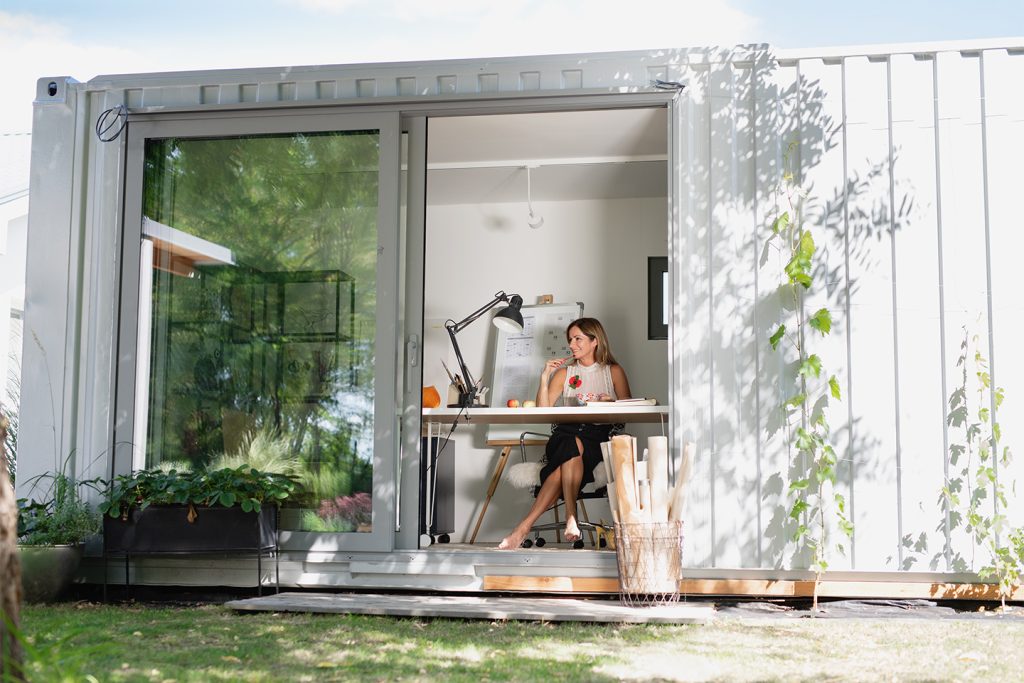
A typical national average for a guest house falls between $62,000 and $225,000, with an overall average around $85,000. But the number that matters for your property depends heavily on how you build it, how large it is, and where you live.
Most homeowners start in the same place. They look at the backyard, side yard, garage, or basement and think, “Could this become a place for family, guests, or rental income?” That's the right starting point. The wrong starting point is assuming there's one universal price.
Guest house construction cost is never just about square footage. A detached custom build, a modular unit, and a garage conversion can all give you livable space, but they land in very different cost bands. Then the soft costs start showing up. Design work, engineering, permits, utility planning, inspections, and code compliance can shift the budget long before cabinets and flooring enter the conversation.
That's why first-time ADU and guest house projects often feel confusing. Homeowners compare one builder's shell price against another company's all-in number and end up comparing two completely different scopes. If you're trying to build a realistic budget, the only useful approach is to look at the project as a total package.
Table of Contents
- How Much Does a Guest House Really Cost
- Choose Your Path Custom Modular or Conversion
- An Itemized Breakdown of Construction Costs
- The Top 5 Factors That Drive Your Costs Up or Down
- Sample Budgets Three Real-World Scenarios
- Financing Your Guest House and Project Timelines
- How to Save Money and Maximize Your Investment
How Much Does a Guest House Really Cost
A homeowner walks the property with a tape measure, stares at the detached garage, and starts doing mental math. If the goal is a rental unit, an in-law suite, or a place for long-term guests, the first question is always the same. What's this going to cost me all in?
The broad national range is wide for a reason. HomeAdvisor reports guest house construction averages $85,000, with a typical range of $62,000 to $225,000, and says a 600-square-foot cottage can run from $60,000 to $300,000 depending on design and location, while permits alone can add $600 to $3,000. That spread tells you something important. The budget isn't just shaped by size. It's shaped by method, site, and local approvals.
A lot of people expect a simple price per square foot to solve the whole question. It helps, but it doesn't tell the whole story on a small detached unit. Smaller structures often carry a higher cost per square foot because the fixed work still has to happen. You still need plans, permitting, utility coordination, and inspections.
If you're comparing ideas and want a sense of what's possible before talking to contractors, it helps to start with detached guest house plans that show realistic layout options. Floor plan choices affect everything from foundation size to plumbing runs to window count.
Practical rule: Treat the first number you hear as a starting range, not a contract price. If it doesn't include site work, permitting, and utility scope, it's not your full project cost.
What usually works best is building the budget in layers. First, pick the construction path. Then look at the site conditions. Then decide where you want to spend for comfort, durability, and appearance. That order keeps the project grounded in reality.
Choose Your Path Custom Modular or Conversion
A homeowner calls us with a common starting point. They want a guest house in the backyard and need to know whether to build new, bring in a modular unit, or convert the garage. The right answer is rarely about the structure alone. It comes down to total project cost, including design work, permitting, site prep, utility connections, and how much uncertainty the property can absorb.

Custom build
Custom stick-built projects give you the most freedom. They work well when you need to match the main house, solve for a narrow lot, fit a full one-bedroom layout, or build around aging-in-place needs.
They also carry the widest pricing swing. The reason is simple. Every choice tends to create another one. A roof change can affect framing, engineering, drainage, and finish details. A layout revision can shift windows, plumbing runs, electrical, and permit review. On custom jobs, soft costs often grow with the design because the plans take longer to develop and approvals can involve more back-and-forth.
Custom makes sense when the property or program is specific enough to justify that flexibility. It is usually the least predictable path from an all-in budget standpoint.
Modular or prefab
Modular is the path many first-time ADU clients should compare first. The building is more standardized, which helps control labor, reduce field changes, and narrow the gap between the early estimate and the final number.
That does not mean the whole project is plug-and-play. You still have real project costs outside the unit itself. Site work, foundation, crane or set costs, utility trenching, permit fees, and local review still matter. The difference is that the building scope is usually clearer upfront, which makes the total budget easier to manage. That is one reason CozyCube often recommends modular for homeowners who want a smarter balance of speed, quality, and cost control.
If you are comparing providers, study how different modular home manufacturers package pricing and installation scope. Some quotes cover the unit only. Others include delivery, set, interior finish completion, or parts of the utility work. A modular project feels predictable when those line items are defined early, not left for change orders later.
Here's a good video overview before you start collecting bids:
Conversion
Conversions can be the lowest-cost path, but only when the existing structure gives you something worth saving. A garage with a sound slab, decent roof, workable ceiling height, and nearby utilities can pencil out well. A worn shed with poor framing, no insulation, drainage problems, and no legal path to occupancy often does not.
Homeowners often get surprised. The shell is already there, but the project can still need structural upgrades, new windows, insulation, HVAC, plumbing, electrical service, waterproofing, and code corrections. Add design drawings and permit work, and the budget can move closer to new construction than people expect.
A conversion saves money when the existing building reduces real scope. It loses its cost advantage when you spend heavily to make a weak structure habitable.
What works best for first-time homeowners
For total project cost, the trade-off is usually straightforward.
- Choose custom if design freedom is the priority and you can tolerate more pricing movement during design and approvals.
- Choose modular if you want a more controlled process with fewer variables and clearer all-in budgeting.
- Choose conversion if the existing structure is in good condition and local code supports a practical legal upgrade.
At CozyCube, we help homeowners compare these paths before they commit to drawings or finishes. That matters because soft costs are real costs. The cheapest-looking option on day one is not always the lowest-cost project by the time permits, utilities, and site work are accounted for.
An Itemized Breakdown of Construction Costs
A guest house budget gets clearer once you stop looking at one square-foot number and start looking at the full stack of costs underneath it. Homeowners usually expect to pay for the building itself. The surprises tend to come from the work around the building, especially design, permits, utility connections, and site conditions.
How builders usually price a detached unit
For detached new construction, builders often start with a per-square-foot baseline, then adjust for the site, the level of finish, and local approval requirements. Block Renovation notes that detached guest house new builds typically cost $250 to $500 per square foot, which puts a 400-square-foot unit near $100,000 to $200,000, while garage conversions are often cited at $75,000 to $150,000 because the foundation and shell are partially existing.
That framework is useful, but it does not tell you enough by itself.
A custom build usually carries the widest range because every decision is being made from scratch, from structure to finishes to plan revisions. A modular build still includes site work, utility work, permits, crane or set logistics where required, and finish connections, but the factory-built portion can make the core construction cost more predictable. A conversion can save money if the existing structure is sound and code-compliant enough to upgrade without major correction work.
Where the money goes
This sample visual is helpful as a planning model:

Most guest house budgets break into the same major buckets, even when the delivery path is different:
- Soft costs cover architectural drawings, engineering, energy documents where required, permit applications, plan check responses, and inspection coordination.
- Site prep includes clearing, grading, excavation, temporary access, hauling, and preparing the pad or work area.
- Foundation covers slab, piers, footings, reinforcing, and any added requirements tied to soils or slope.
- Structure includes framing, wall assemblies, subfloor, roof framing, and sheathing for new construction.
- Exterior finishes cover siding, roofing, windows, exterior doors, trim, flashing, and paint or stain.
- Interior finishes include insulation, drywall, flooring, cabinets, countertops, tile, interior paint, trim, and hardware.
- MEP work means mechanical, electrical, and plumbing. This category often holds more cost than owners expect because even a small unit still needs a real kitchen, a bathroom, ventilation, and dedicated circuits.
- Utility connection work can include trenching, sewer tie-ins, water service, gas routing, meter changes, and electrical panel upgrades.
- Final exterior scope may include stairs, paths, drainage improvements, fence modifications, and basic landscaping repair.
The overlooked budget pressure is usually legality and serviceability. A guest house has to pass review, connect to utilities, and clear inspections. Those line items do not show up in the finished photos, but they are real costs.
Here is a practical worksheet for a 600 sq. ft. custom build. These are planning ranges, not quotes, and they work best as a way to test where the budget may expand or tighten.
| Cost Category | Percentage of Total Budget | Estimated Cost Range |
|---|---|---|
| Soft costs and permits | 5% | $4,500 to $7,500 |
| Site prep and foundation | 10% | $9,000 to $15,000 |
| Framing and structure | 18% | $16,200 to $27,000 |
| Roofing | 7% | $6,300 to $10,500 |
| Exterior finishes | 15% | $13,500 to $22,500 |
| Interior finishes | 20% | $18,000 to $30,000 |
| Plumbing | 8% | $7,200 to $12,000 |
| Electrical | 8% | $7,200 to $12,000 |
| HVAC | 6% | $5,400 to $9,000 |
| Basic landscaping and access improvements | 3% | $2,700 to $4,500 |
The table also helps compare project paths in a practical way. In a custom build, nearly every category is active because you are building a complete detached structure. In a modular project, the factory package can reduce uncertainty in the structure and part of the interior scope, but soft costs, foundations, transport, set work, utility hookups, and local finish work still need to be budgeted carefully. In a conversion, the structure and exterior line items may shrink, but soft costs, code upgrades, MEP work, and correction work can grow fast if the existing building was never designed for living space.
Soft costs deserve more attention than they get
First-time owners often focus on finishes because those costs are easy to see. The harder costs to judge are the ones before and around construction. Plan revisions, engineering, permit comments, school or utility fees in some jurisdictions, and inspection coordination can change the total project cost in a meaningful way.
At CozyCube, this is one of the biggest budgeting gaps we help owners close early. A modular guest house is often the smart path because the main structure is more standardized and easier to price with confidence, but the total project still depends on the same outside variables every ADU faces. Good budgeting includes the unit, the site, the approvals, and the connections from day one.
The Top 5 Factors That Drive Your Costs Up or Down
Two guest houses can have the same floor plan and end up with very different final prices. That's normal. The budget moves because of external conditions and project choices, not just because one builder is cheaper than another.

The fixed choices you make early
Some cost drivers are largely set at the beginning:
Location
Regional labor pricing, local review standards, and permit burden matter a lot. McDowell Mountain Builders reports guest houses can run about $300 to $500 per square foot in Scottsdale and about $200 to $500 per square foot in San Diego, with a recommended contingency of 10% to 15% for unforeseen issues. If you build in a high-cost market, even a straightforward plan can carry a higher baseline.
Size
Bigger units cost more in total, but very small units aren't automatically cheap on a per-square-foot basis. Kitchens, bathrooms, permits, and service connections don't disappear just because the footprint shrinks.
Floor plan complexity
Straightforward rectangles are easier and cheaper to frame and roof than plans with bump-outs, complex rooflines, and multiple corners. Simpler geometry usually lowers labor friction.
The site issues that surprise people
The rest of the cost drivers tend to emerge from the property itself:
Existing utility conditions
If the panel is undersized, the sewer route is difficult, or the water connection is far from the unit, the site budget rises quickly.Soil, drainage, and access
Tight access for equipment, sloped lots, drainage corrections, or foundation adjustments all add labor and coordination.Finish level
Standard windows, stock cabinets, and durable builder-grade surfaces keep a project grounded. Premium tile layouts, custom millwork, and specialty doors don't just add material cost. They also add installation time.Code and permitting complexity
Some jurisdictions are more direct than others. The same detached unit can face a very different review process depending on where it's built.
Carry contingency from the start, not after the first surprise. In small detached projects, one utility issue or code-driven revision can move the budget more than a finish upgrade.
The five strongest levers you control
For most homeowners, the most effective cost controls are straightforward:
- Keep the shape simple: Simple footprints are easier to build and easier to estimate accurately.
- Prioritize function over excess: Spend on layout, storage, insulation, and durable finishes before spending on decorative complexity.
- Study the utility path early: Utility distance and hookup difficulty can swing the budget.
- Confirm code assumptions before design moves too far: Redesign after submission is where avoidable cost creeps in.
- Hold a real contingency: The earlier source's 10% to 15% contingency recommendation is practical because residential sites rarely reveal everything up front.
The best budgets don't come from squeezing every line item. They come from knowing where flexibility exists and where it doesn't.
Sample Budgets Three Real-World Scenarios
Sample budgets help more than abstract ranges because they show how different goals shape spending. The numbers below are planning scenarios built around the cost pathways already covered. They aren't contractor quotes. They're realistic decision models.

Scenario one basic conversion mindset
A homeowner has a detached two-car garage in decent condition. The goal isn't luxury. It's a clean studio with a bathroom, a compact kitchenette, legal egress, insulation, and a private entrance.
The infographic above uses $55,000 as a sample total for a basic garage conversion. That figure fits only when the existing shell is readily usable and the structural work stays limited. The budget works because the owner is reusing the slab, walls, and roof structure, while keeping finishes simple and minimizing layout changes.
What tends to make this scenario succeed:
- The shell is worth saving
- The plumbing route is manageable
- The owner accepts design constraints
- The finish package stays practical
What tends to break the budget:
- Hidden structural issues
- Major electrical or plumbing upgrades
- Trying to make a garage feel like a custom cottage
Scenario two modular with cleaner cost control
The next owner wants a detached backyard studio for guests and future rental flexibility. The priority is predictability. They're comfortable choosing from a defined plan set and standard finish options instead of reinventing the wheel.
The scenario graphic uses $110,000 for a standard modular ADU. That total makes sense when the unit itself is relatively efficient and the site work is straightforward. This path often works well because there are fewer variables inside the structure. The owner can focus on utility planning, foundation prep, delivery access, and finish selections without carrying the full uncertainty of a one-off build.
A modular budget usually feels cleaner because:
- The structure is more standardized
- Factory or system-based production reduces field improvisation
- Selections are narrower, which limits budget drift
- Scheduling can be more controlled once approvals are in place
Modular isn't magic. You still pay for site work, permitting, and hookups. But it often reduces the number of budget decisions that spiral during construction.
This is often the most balanced path for a first guest house project. It doesn't offer unlimited customization, but many owners don't need unlimited customization. They need a unit that pencils out, gets permitted, and gets built without constant change orders.
Scenario three custom build for design freedom
The third owner wants a detached backyard retreat that matches the main home. They care about architectural character, upgraded finishes, and a more polished one-bedroom living experience.
The infographic uses $220,000 for a custom backyard retreat. That lines up with the upper end of the broader national range discussed earlier and reflects what happens when a homeowner chooses higher design freedom and more premium selections.
This budget usually includes:
- Ground-up design work
- A more involved permit package
- Higher-end exterior materials
- More custom interior work
- Additional landscaping or site finishing
Where this path earns its keep is lifestyle value. A well-designed custom guest house can feel like a true second residence rather than a converted outbuilding or compact studio. But it needs discipline. Without scope control, custom projects are the easiest to overbuild.
The practical lesson across all three scenarios is simple. The right budget isn't the lowest number. It's the number that matches the structure, site, and purpose without pretending the hidden work doesn't exist.
Financing Your Guest House and Project Timelines
Once homeowners understand the likely project cost, the next pressure point is cash flow. The build may make sense long term, but the upfront funding still has to work in practice.
How homeowners usually pay for it
Most guest house projects are funded through one of a few common routes:
Home equity loan
This works best for owners who want a lump sum and prefer predictable payments.HELOC
A home equity line of credit can be useful when costs will be drawn in stages and the owner wants flexibility during design, permitting, and construction.Cash-out refinance
Some owners prefer folding the project into a larger mortgage structure, especially if the broader financing terms are favorable.Construction loan
This can be the better fit when the project is large enough to justify a dedicated build structure and draw schedule.
If you're comparing loan options, this guide to an ADU construction loan is a useful place to start. The right financing path depends on equity, timeline, risk tolerance, and whether the unit is primarily for family use or income.
A good financing decision does two things. It covers the actual project scope, and it leaves room for the inevitable surprises that come with detached construction.
What a real project timeline looks like
Timelines are harder to standardize than costs because local approvals vary so much. Still, most projects move through the same sequence:
Feasibility and budget alignment
The owner confirms setbacks, access, intended use, rough scope, and whether the property supports the plan.Design and scope definition
The floor plan, utility strategy, finish level, and code assumptions must become concrete.Permitting and revisions
Plans go in, comments come back, and the approval cycle takes as long as the jurisdiction takes.Site work and utility preparation
Before the livable space takes shape, crews often need to handle foundation work, trenching, or service upgrades.Construction and inspections
This phase moves faster when the planning was clean and slower when unresolved details remain.
A modular project can reduce uncertainty during the build phase because more of the structure is standardized. A custom build may require more active decision-making during construction. A conversion can go quickly if the shell is straightforward, or bog down if hidden conditions appear after demolition.
The schedule that matters isn't just construction time. It's the full path from first sketch to final approval.
That's why experienced builders push for clear drawings, realistic budgeting, and early utility review. The cleaner those pieces are, the less likely the project is to stall in the middle.
How to Save Money and Maximize Your Investment
A lot of homeowners start with the wrong target. They try to cut the construction number, then get hit later by design revisions, permit comments, utility work, or finish upgrades they did not budget for. The better way to save money is to lower total project cost while protecting the parts that make the unit durable, usable, and rentable.
The biggest savings happen before crews show up.
Path selection matters more than people expect. A fully custom guest house can make sense on a difficult lot or for a very specific design goal, but it usually carries more architectural time, more engineering coordination, and more opportunities for scope creep. A modular build usually gives owners tighter pricing and fewer surprises because the design is standardized earlier. A conversion can be the cheapest path if the existing structure is sound, but that "if" matters. Once demolition exposes foundation issues, low ceiling heights, outdated wiring, or poor access, a cheap conversion can stop being cheap.
That is why we push homeowners to compare all three paths by total cost, not headline build cost. At CozyCube, that means looking at design, permitting, site prep, utility connections, finish level, and contingency together so the budget reflects the complete job.
Where savings are actually worth chasing
A simple plan saves money in several places at once. Clean rooflines, fewer corners, stacked plumbing, and standard window sizes reduce labor, material waste, and coordination problems.
Finish selections matter too. Spend money on the shell, insulation, windows, waterproofing, and the kitchen and bath components that get daily use. Save on items that are easy to upgrade later, such as decorative lighting, cabinet hardware, or feature tile.
Size should match the use case. A unit that is too small can limit guest comfort, rental flexibility, and long-term value. A unit that is larger than needed adds cost to nearly every line item, from foundation to roofing to mechanicals.
Common ways budgets get blown
These are the mistakes that show up over and over:
- Choosing custom details that do not improve function
- Changing the layout after plans are underway
- Underestimating permit, design, and utility costs
- Using cheap materials in high-wear areas
- Treating an old garage like a clean conversion before verifying the structure
One outside example makes the size trade-off clear. House Beautiful notes that very small guest houses can be cheaper to build, but units with more usable square footage often hold value better and serve more practical living needs over time. That matches what we see in the field. Tiny can look efficient on paper and still disappoint once someone tries to live, host family, or generate rental income in the space.
The best return usually comes from restraint, not from stripping the project down to the minimum. Build a unit people can use. Keep the layout efficient. Avoid niche design choices. Use materials that can handle wear without constant replacement.
A smart budget is boring in the right places.
It covers the soft costs early, keeps the plan simple, and chooses a build path that fits the property instead of forcing the property to fit the idea. For many first-time ADU owners, modular is the strongest value play because it improves cost control without giving up comfort or code compliance.
If you want help turning rough ideas into a workable budget, CozyCube can help you compare modular, custom, and conversion options with a clearer view of real project scope, permitting needs, and the trade-offs that affect cost.